Hens in cage-free systems have more room than hens in conventional cages. This helps accommodate enrichments such as perches, areas for dust bathing, and nests.
Do you have a question about egg production, hen care, the UEP Certified program or egg quality and safety?
We’ve got answers to frequently asked questions below, or check out Resources for additional information.
Hens in cage-free systems have more room than hens in conventional cages. This helps accommodate enrichments such as perches, areas for dust bathing, and nests.
UEP Cage-free requires hens have shelter and water and fresh feed available at all times. Shelter is important to ensure the hens are protected from predators and safe during inclement weather. Additionally, the housing ensuring hens have a comfortable place to rest at night.
Eggs labeled free-range or pasture-raised are laid by hens with some access to the outdoors. In addition to eating grains, they may forage for insects and wild plants. There are no established uniform standards for free-range or pasture-raised housing.
Farms with free-range or pasture-raised hens and can participate in the UEP Certified Cage-Free program.
Cage-free eggs are laid by hens that can roam vertically and horizontally in barns and have access to fresh food and water. Cage-free systems vary from farm to farm and can include multi-tier aviaries. They must allow hens to exhibit natural behaviors and include enrichments such as scratch areas, perches, and nests. Hens must have access to litter, protection from predators, and be able to move through a barn in a manner that promotes bird welfare.
Hens may be housed in a number of different environments. Regardless of housing, ensuring the health and well-being of all hens is a top priority for U.S. egg farmers, and the nutrient content of eggs remains the same. Some hen housing examples include:
In free-range or pasture-raised housing hens, have some access to the outdoors. In addition to eating grains, they may forage for insects and wild plants. There are no established uniform standards for free-range or pasture-raised housing.
Beak trimming is performed when a pullet is 10-days old or less using a specialized instrument designed to simultaneously cut and cauterize the beak. Beak treatment is performed at the hatchery on the day of hatch and utilizes infrared technology to blunt beaks. In both instances, only a few millimeters of the beak is trimmed.
UEP recommends beak trimming/treatment only when necessary to prevent feather pecking and cannibalism. When necessary for hen well-being, it must be carried out by trained personnel using procedures approved by the American Veterinary Medical Association (AVMA) and regularly monitored for quality control.Advantages of beak trimming/treatment may include reduced feather pecking, reduced feather pulling, reduced cannibalism, better feather condition, less fearfulness, less nervousness, less chronic stress, and decreased mortality. For more information on the UEP Certified guidelines for beak trimming/treatment, see the UEP Certified Conventional Cage Guidelines and UEP Certified Cage-Free Guidelines. Learn more with this video on beak treatment from the Coalition for Sustainable Animal Agriculture.
Egg farmers are committed to producing safe, high-quality eggs and keeping their hens healthy and free from disease. Egg farms may use a limited number of FDA-approved antibiotics, provided they comply with FDA guidelines for usage. These FDA regulations also are designed to assure antibiotic residues are not passed on to eggs.
Due to the effective use of vaccines and on-farm disease prevention, only a small percentage of egg-laying flocks ever receive antibiotics. If they do, it is usually under the supervision of a veterinarian and only for a short time to treat a specific disease or to prevent a recurring disease.
It’s important to know eggs can only be labeled as antibiotic-free if egg farmers choose not to use any antibiotics at any point in the hen’s life. Certified organic eggs must be antibiotic-free by regulation.
No growth or production hormones are ever fed to egg-laying hens at any point in their life; this is prohibited by FDA regulations. Egg farmers promote optimal growth by feeding hens a high-quality, nutritionally balanced diet made up of mostly corn, soybean meal, vitamins, and minerals. The feed is carefully formulated with the proper nutrients to produce quality eggs.
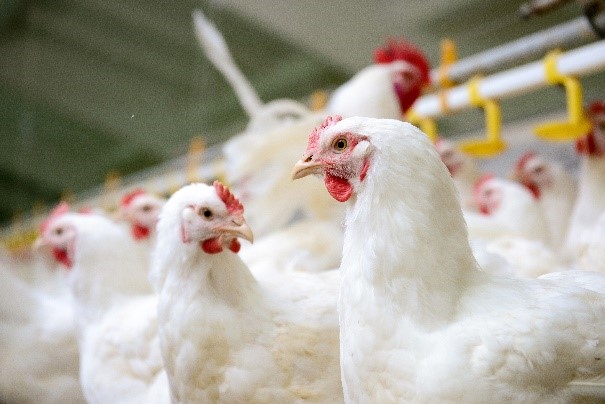
Hens are housed inside barns to keep them safe and healthy. Indoor housing protects hens from extreme weather, predators, and disease-carrying migratory waterfowl and wild birds. Keeping flocks inside also enhances the opportunity for animal care workers and veterinarians to regularly monitor the flock’s health.
Biosecurity measures prevent diseases from entering a farm and spreading between flocks. While biosecurity protocols on individual farms may vary, common steps include limiting access of the facility to essential personnel, disinfecting vehicles that enter, using special biosecurity signage, wearing designated clothing, and utilizing footbaths, and specially designed entry/exit systems.
It takes about 25 hours from ovulation until a hen lays an egg. The hen then begins forming another egg 30 minutes after it lays an egg.
Farmers are concerned about our natural resources, and they work hard to be responsible stewards of the land, water, and energy. Today’s egg farms use water and arable cropland more efficiently while using less fuel than farms 50 years ago.A study by the Egg Industry Center details how U.S. egg farms have reduced their environmental footprint over a 50 years period through improved hen feed, better disease control and lower death loss, advancements in hen housing, and subsequent reduction of natural resource use. This life cycle assessment found that 2010 egg production had 71% lower greenhouse gas emissions compared to 1960. In 2010, 32% less water is used to produce a dozen eggs versus 1960. And using 1960 technology to produce today’s supply of eggs would require 1.3 million more acres of corn and 1.8 million additional acres of soybeans. An updated life cycle assessment is currently being conducted.
Both conventional and organic eggs are produced by hens with continuous access to water and safe wholesome feed.
Organic eggs are produced by hens fed and housed according to the United States Department of Agriculture’s established organic standards. The hens’ diet consists of ingredients grown to standards detailed within the organic program and other special requirements such as access to the outdoors. For more information on production guidelines for organic eggs, visit USDA’s National Organic Program.
There are no nutritional or food safety differences between eggs produced in cage-free or conventional houses. These labels refer to the housing environment where the hens live and produce eggs. When managed properly, all production environments (conventional, enriched cage, cage-free, and organic/free-range) provide safe, nutritious, quality eggs. This article from the Egg Nutrition Center provides the results of a recent study by the USDA on the nutrition content of eggs from hens raised under five different housing systems.

In 1999, UEP recognized a growing concern for animal welfare and commissioned an independent Scientific Advisory Committee (SAC); a group of independent scientists, researchers, and veterinarians committed to laying hen welfare. UEP’s Producer Animal Welfare Committee, egg farmers with specific, hands-on knowledge of hen production, also provides guidance and leadership for the program. In 2002 the UEP Certified Program began, and UEP Certified Cage-Free guidelines were introduced in 2006.
Today, these committees work collaboratively, with regular reviews of new research and modern egg farm standards to continuously improve the UEP Certified program.
The Program has been endorsed by the Food Marketing Institution, the National Council of Chain Restaurants, and the International Egg Commission. UEP continues to convene this committee to evaluate hen well-being standards, review existing research, conduct new research, and recommend best practices.
UEP Certified guidelines require egg farmers to comply with strict guidelines. UEP Certified has zero-tolerance for willful acts of abuse and neglect and requires all UEP Certified farms to implement an employee policy enforcing this commitment.
For more information, view the guidelines:
For a refund or exchange, contact the retailer where the eggs were purchased. The UEP Certified logo appears on several egg brands, as a majority of egg farms across the U.S. voluntarily participate.
No, the UEP Certified logo signifies that the eggs originate from independent farmers that raise hens adhering to the animal welfare standards of the UEP Certified Program. These science-based standards ensure hen care and well-being and were developed by an independent, unpaid Scientific Advisory Committee working with the UEP’s producer lead Animal Welfare Committee.The UEP Certified guidelines have been developed for both conventional cage and cage-free egg-laying hens.
The UEP Certified logos identify eggs in the marketplace as produced by UEP Certified farms and signifies that the hens that laid the eggs were raised under science-based animal well-being guidelines. Each UEP Certified farmer is audited annually by a third-party inspector to ensure they comply with the guidelines. The UEP Certified logo appears on many egg brands, as a majority of egg farms across the U.S. voluntarily participate in this program.
Salmonella is found in the intestinal tracts of animals, birds, reptiles, insects, and humans. Salmonella may be found on the outside of the eggshell before the egg is washed, and in rare cases, it may be inside the egg if the hen was infected prior to egg-laying. Proper cooking and handling of eggs is important to greatly reduce the risk of food-borne illness. Cook eggs thoroughly until the white and the yolk is firm. Visit the Egg Safety Center and see “Cooking Eggs to the right temperature,” for more information.
Eggs are shipped off the farm, typically within a week of being laid. They are transported in refrigerated trucks to stores and restaurants.
The Egg Safety Center provides information on egg storage and handling, the appearance of eggs relative to egg safety, tips on safe preparation and cooking of eggs, and more.
The USDA grade shield on the carton means that the eggs were graded for quality and checked for weight (size) under the supervision of a trained USDA grader. These eggs will bear the USDA shield. USDA monitors compliance with quality standards, grades, and weights. State agencies monitor compliance for egg packers who do not use the USDA grading service. These cartons usually will bear a term such as “Grade A” on their cartons without the USDA shield.
Eggs are taken to the egg processing room within hours after being laid. In the processing room they are visually inspected and graded for packaging. To view all the steps from the farm to the table that keep eggs safe, visit An Egg’s Journey.
Egg farms follow strict guidelines to produce safe, healthy eggs. Hens are provided veterinary care, a balanced diet, and constant access to fresh water, so they stay healthy and produce quality eggs. Rigorous biosecurity and cleaning procedures are implemented on farms to help prevent disease, and eggs are gathered promptly to provide a cleaner, safer egg. In the processing room on the farm, eggs are sanitized through washing with 110-115°F water and spray jets, brushes, and a warm detergent solution to remove contaminants. Through the process, eggs are handled by machines instead of human hands to decrease potential damage and exposure to contaminants. Eggs are required to be refrigerated within 36 hours of lay, and they stay refrigerated through transportation to stores and restaurants. For more information on farm safety measures, visit the Egg Safety Center.